

28 July 2010

Summer Reading List: Books on the Brain and Learning

Summer Reading List
Books on the Brain and Learning:

Jen Stanchfield, M.S.

experiential education and brain-based learning

Summer is a great time to relax and rejuvenate. Many educators find that some time away from our students or clients is perfect for reflecting on our professional practice. It can be enjoyable to take some time to learn about new resources and information at a relaxed pace.


Along with some good novels, I have gathered a number of books on learning and leadership for my own summer reading time that many of you also might find interesting. In the next few posts I will share those that are at the top of my list.


I am especially hooked on books focused on the brain and educational practices. Recent information from neuroscientists about ideal learning environments and teaching strategies supports the tenets of experiential education. It is intriguing that the ideas about teaching John Dewey and his peers put forward almost a century ago are now being validated through scientific research on the brain and learning.


Here are a few books on the subject that make for an engaging and informative summer read:

Brain Rules: 12 Principles for Surviving and Thriving at Work, Home, and School by John Medina

I first heard about this book on a radio show arguing for educators to re-think Powerpoint presentations. The author John Medina writes “Toss your PowerPoint presentations. Powerpoint is text-based (the typical having nearly 40 words per slide), with six hierarchical levels of chapters and subheads — all words. Professionals everywhere need to know about the incredible inefficiency of text-based information and the incredible effects of images. Burn your current PowerPoint presentations and make new ones.” This statement and his discussion of communicating more with pictures than with words caught my attention (especially of course since it supported my own opinions on the subject.)


When I saw the book in the airport bookstore a year ago I picked it up and started reading it on the plane. Medina’s engaging and humorous style drew me in. He shares many real-life examples of the implications of neuro-scientific findings on the brain and learning, memory and retention. I made many notes in the margins regarding practical strategies that could help me improve my presentation skills to better reach learners and help them retain information. It has moved to the top of my pile and I’ve cracked it open again as I am starting to plan some of my fall in-service programs.


Research-Based Strategies to Ignite Learning by Judy Willis M.D
Insights from a Neurologist and Classroom Teacher

Judy Willis, the author of this book has a very interesting background. She initially practiced 15 years as a Neurologist before becoming a classroom teacher. Her expertise in both of these areas provides the useful insights and practical strategies that make up this book. The book focuses on blending neuroscience and teaching practice, helping educators use strategies to help students learn in her words: “most effectively and joyfully”. She specifically mentions experiential learning as a key approach to creating engaging lessons that will be retained. This is a short summer read that will give educators distilled and easy to understand information about the brain and learning and useful ideas to bring back to your practice. Though the book is targeted to classroom teachers the content is useful for any educator and applicable to all age groups.


How the Brain Learns by David Sousa

I read the first edition of this book about 10 years ago, it was one of the first I picked up on the subject of neuroscience research and its implications for educators(along with Eric Jensen’s, Teaching with the Brain in Mind.) I remember my excitement about finding that research on the brain was starting to support the experiential approaches that I could see were working with learners in my own groups and classrooms. This book not only validated some of the techniques that I could see were working, it helped me reflect on and improve my teaching and group facilitation methods to become more “brain-friendly”. Sousa offers a nice blend of theory and practical applications. I am interested in re-reading the latest edition to gain new perspectives and updated information.


SPARK, The Revolutionary New Science of Exercise and the Brain by John J. Ratey, M.D.

This is a bestseller that you will see on the shelves of most bookstores these days. It was originally marketed as a self- improvement book focusing on the mind-body connection in relation to stress-reduction, memory boosting and reducing depression. It has become popular with educators, managers and trainers from a variety of fields because of its practical applications. I found the author’s overview of the brain function, brain research history helpful in understanding some of the language of neuroscience. His chapter on learning, and information about ADHD interesting is especially relevant and useful for educators.


The book has been a hit with many physical educators as the book focuses on how neuroscience is demonstrating that movement is critical for human cognitive performance. Many educators will find Ratey’s case study of Naperville, Illinois School District’s fitness program (which he argues has put this school district of 19,000 kids first in the world of science test scores) compelling in this day and age of reduced funding for physical education.


It is an exciting time to be in the field of education. These are just a few of many great books and resources on the ever growing field of information on the brain and learning.


Please share what you have been reading this summer!


References:

Medina, John. (2008). Brain Rules: 12 Principles for Surviving and Thriving at Work, Home and School. Seattle, WA: Pear Press.

Ratey, John. (2008). Spark: The Revolutionary New Science of Exercise and the Brain. New York: Little Brown and Company.

Sousa, David. (2006). How the Brain Learns. Thousand Oaks, CA: Corwin Press.

Willis, Judy. (2006). Research-Based Strategies to Ignite Student Learning. Alexandria, VA: ASCD.

  • Share/Bookmark

10 July 2010

Inspired by Journaling in the Classroom- Latest WNB Friday Lesson

Check out yesterday’s Wood ‘N’ Barnes Friday Lesson Post.

page99mis2bookfinal0605-3
Inspired by Journaling in the Classroom: An educator shares how she has used journaling prompts from The Me I See, 2E with her students.
Heidi Pauer, a High School Language Arts Teacher from Bow, NH, shared a couple of fun ideas with us. The first was how she has been using The Me I See, 2E [...]

Continue Reading...

  • Share/Bookmark

02 July 2010

The Firefly Group

This week The Firefly Group posted an article in their online newsletter about using the Miniature Metaphors Processing Tool.  Thanks to Brian Remer and The Firefly Group for your review!

logosparkglow

The Firefly Group works to create a collaborative learning environment by using playful methods. They work with businesses, non-profits, and government agencies in mission & vision, team building, leadership development, training of trainers, and project management.  Each month they publish an on-line newsletter intended to offer something useful for leaders and trainers.  Check out their website.


  • Share/Bookmark

25 June 2010

More on Learning Through Writing and Reflection

Latest Wood ‘N’ Barnes Friday Lesson: Thoughts on Sharing Journal Entries With Others

The Me I See

Excerpts from The Me I See: Click Here to Read Full Post

  • Share/Bookmark

04 June 2010

Processing in the Middle of the Experience

Processing in the Middle of the Experience
Jen Stanchfield


Often when we facilitate reflection with groups, we make time after the experience or lesson is completed to review and reflect. Many educators describe their reflective practice with groups as “debriefing”—a word that originated in the military for the act of eliciting a report from a soldier to officers after a mission was completed. I have never been a big fan of the term “debriefing” in the education field for many reasons, most importantly because it seems limiting. Reflection can be much more dynamic than sitting a group down after an activity to be questioned and report out to the facilitator.


About ten years ago during a conversation at a conference about group facilitation and processing, Luk Peeters, a therapist and experiential educator from Belgium, shared with me that he believes that the optimal place to capture a lesson is WHILE it is happening.


His comments really sparked my thinking about how to take advantage of those opportunities. I had been occasionally stopping groups in the midst of an activity to discuss and reflect, but usually only when things weren’t going well. I asked myself: Why not stop a group midway when things are going beautifully so they can remember what if felt like, looked like, and sounded like?

Processing, Reviewing, Reflective Process
I started trying to weave in some brief “stop actions” in the midst of a challenge for groups to stop, look around, and identify what is working. Or, for a group that had struggled at the beginning and was now moving forward to identify what it was that had changed within their group process. It seemed that stopping in mid-activity allowed group members to take mental snapshots of key learnings and better apply them in subsequent activities. (In challenge course and other adventure learning situations make sure the group is in a physically comfortable/safe spot before stopping for this mid-activity reflection—so participants can fully attend to the conversation.)


One day not long after being inspired by Luk’s comments, I was facilitating a group of students in Middleton, Wisconsin’s High School challenge course class. I decided to place a set of Chiji cards on the middle “island” of the group “river crossing” challenge (see my last post for more information on card and object reflection activities).


My co-teacher Donna Richter and I were trying to adapt the challenge course activity  “Nitro Crossing” so that 25 students would be able to participate safely and still feel challenged and involved throughout the experience. So we brainstormed ways to keep students spread throughout the “islands” so there wasn’t a lot of waiting at the swing rope area.


The students had a variety of tasks to complete on their island journey, including retrieving the swing rope they were using to cross to island one, building a puzzle “bridge” to get to island two, and transporting water to island two.


After contemplating the idea of having participants process mid-stream, we decided to set out a deck of Chiji (image cards) on the third island. As participants passed through island three, we asked them to use the cards to tell the story of their island journey. I was impressed by the student’s engagement in this task—the insights and observations they communicated about their group’s strengths, weaknesses, and goals—as they pulled together their story using the cards. The dialogue developed through the cards and story connected what they were learning with the real life issues of accomplishing school coursework, preparing for graduation and college, and working out conflict with peers. The story continued to develop as each group passed through island three. At the end of the activity, the group was excited to share the entire story (without any prompting from me or Donna).


reflective practice using metaphor
As homework, we asked them to journal about their river crossing, and we found that the Chiji images and their connection to real-life goals were represented in many of the students journals. The next time the group engaged in a challenge together they seemed to be more adept at employing the skills and attributes they had discussed during the island crossing challenge.


After this experience, I continued to use metaphoric image cards and objects as a way to process “midstream” in a variety of ways (see last week’s post).  This included laying out cards or objects at a transition point in the middle of a program and asking groups to come to agreement on three cards that represent three important skills they used in the activity that they think will be useful in upcoming activities.  I often (especially with younger groups) have them carry these cards or objects with them to the next activity, and I’ve noticed they pull them out as a reminder, mid-activity, when the group starts falling into old habits. I often find a way to integrate them into the next activity or refer back to them to illustrate transfer of skills/learning to future situations.


Other opportunities for weaving reflection into the activity include using them in frontloading an activity. For example, having group members choose objects that represent goals for their program, workplace, or other situation and then making them part of the challenge itself in some way. There are many creative ways you can integrate reflective practice into the action phase of learning. Regardless of how you do it, I think you will find that groups engage in more meaningful reflective discussions spontaneously throughout their learning experiences if you “mix up” your approaches to facilitating reflection.


In order for change to happen the optimal time is whilst experiencing and at that time being able to open up for the new or the not-alike. Afterwards we often ‘think’ we have learned something but in the next situation we do exactly as before, and that is because the actual emotional schemes that direct our behavior have not changed. It is like trying to change a software program in a computer. That is only possible if the computer is up and running.” -Luk Peeters

  • Share/Bookmark

19 May 2010

Engaging Groups in Meaningful Dialogue and Reflection While Practicing Decision-making and Consensus Building.

Engaging Groups in Meaningful Dialogue and Reflection While Practicing Decision-making and Consensus Building.

Jen Stanchfield


My last few posts have explored the power of play to help learners build decision-making, and conflict resolution skills. I have emphasized that educators can intentionally “weave in” opportunities for groups to practice these skills throughout their day- to-day lessons. Processing discussions can be one of those great opportunities to maximize learning. My favorite method for engaging a group in reflection or “processing” also involves the practice of group decision-making and consensus building.


Postcard Processing
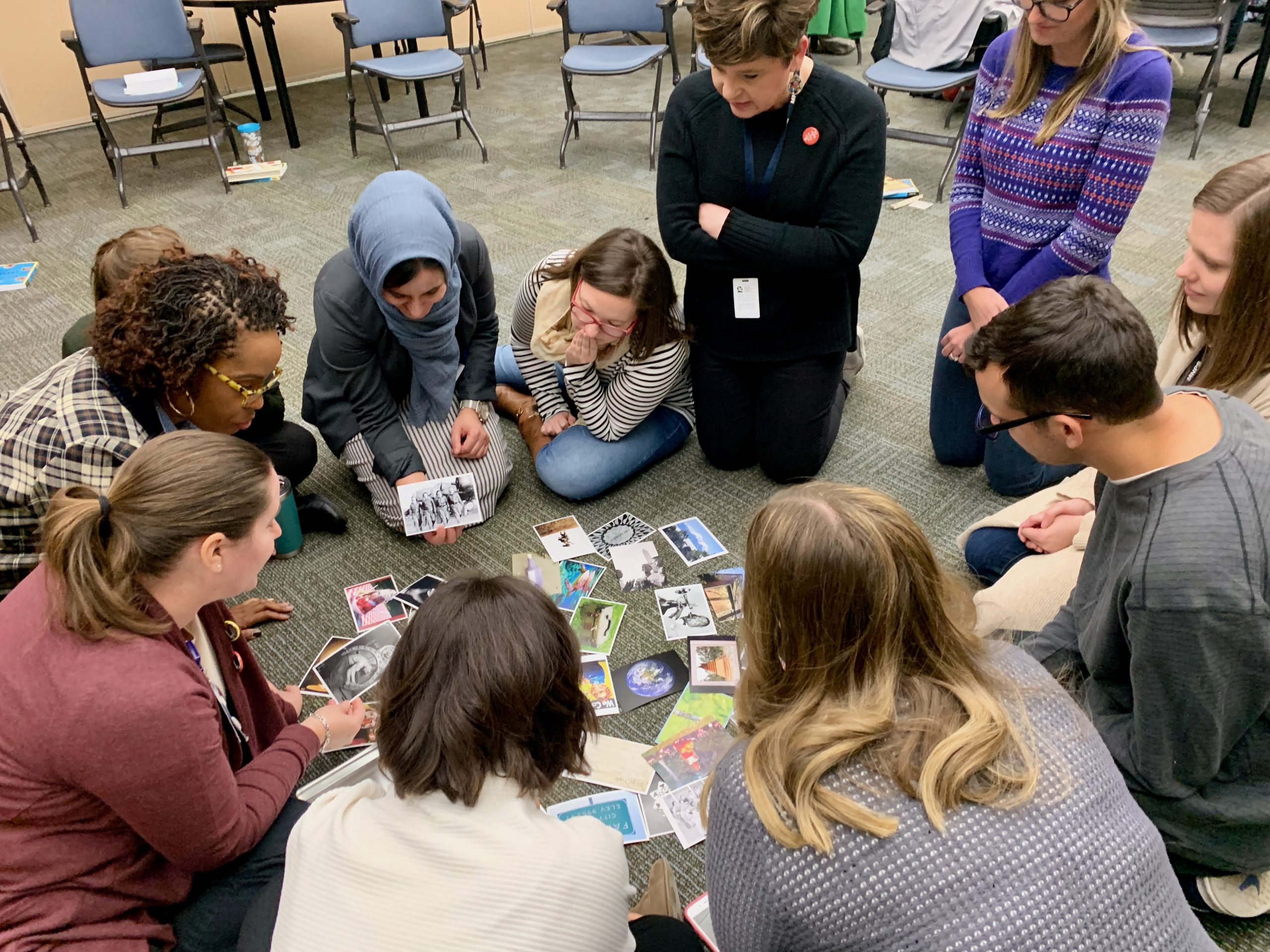
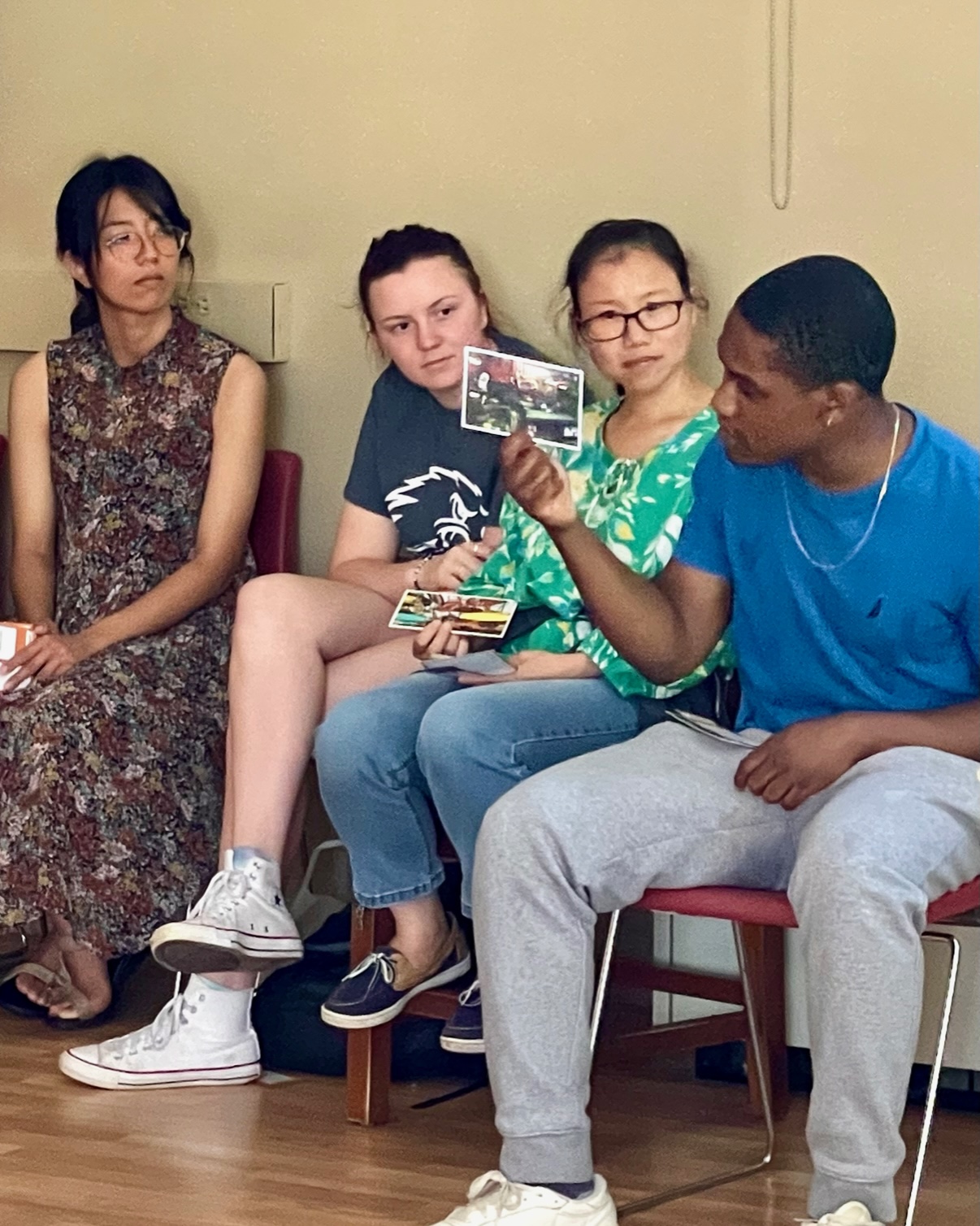
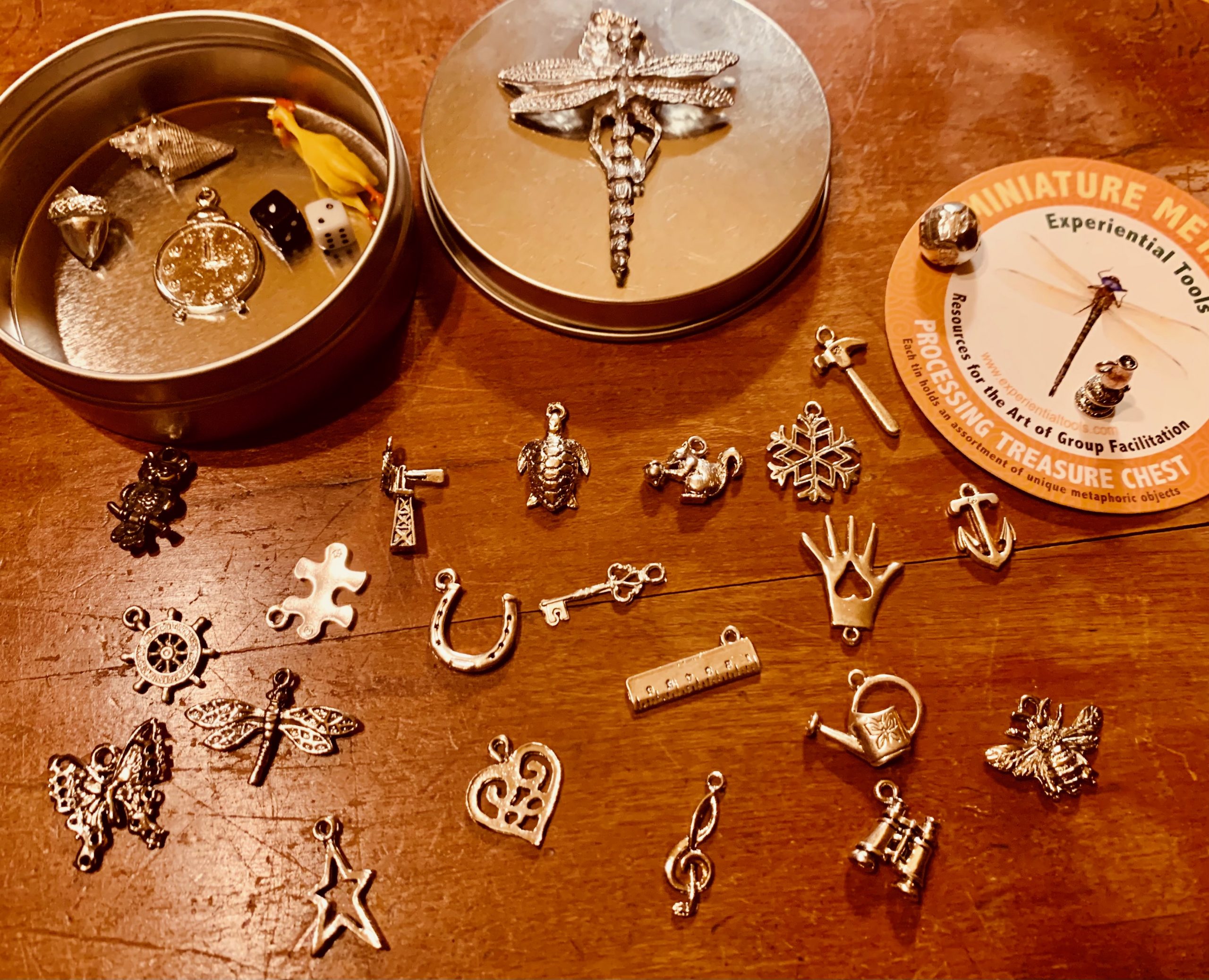
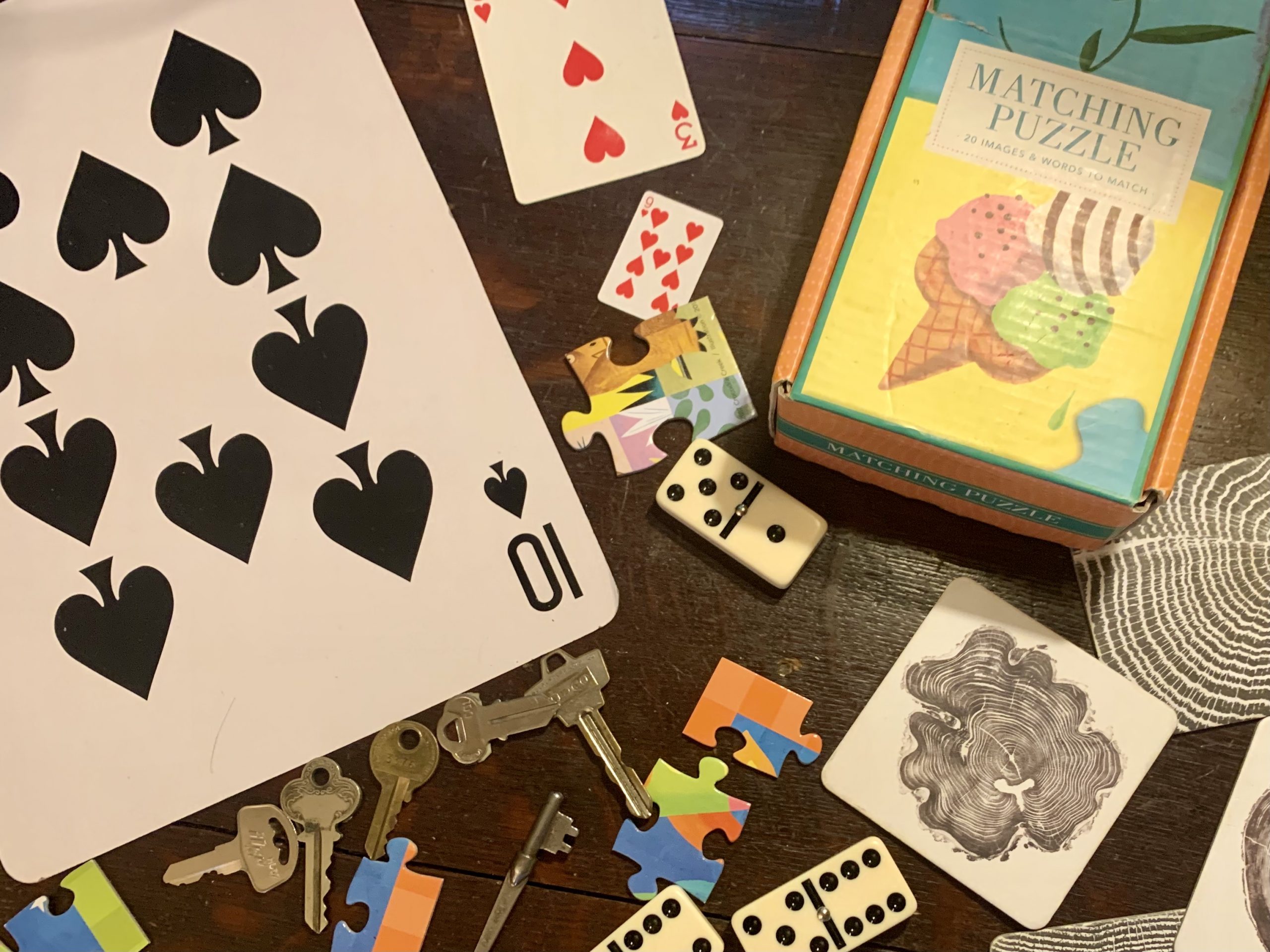
I really enjoy using postcards, “Chiji Cards” and objects as a tool for facilitating meaningful dialogue and processing with groups. Over the years, I have learned that using objects and imagery in processing and reflection leads to more in-depth discussions and outcomes with my groups. These methods are effective because participants can attach their thoughts to an object that can be touched and shown to a group.  Because the participants can talk about the object or image rather than themselves directly, they can express thoughts that would otherwise be left unsaid.  When groups use pictures and objects in reflective discussions, the thoughts, ideas, and connections seem broader and deeper than when using dialogue alone.  A visual representation of an experience can be effective long after the experience is over, reminding a group or participant of the key lessons learned(for more on this subject see my October 19th WNB blog post “Bringing Learning to Life Through Reflection”).


Processing Toolbox

For many years, especially during my time working with small groups in treatment programs I used tools such as processing cards (from a collection of postcards or a deck of Chiji cards) or objects (from a collection of household objects, found objects or charms) in just one way. I would have each individual choose a card or object that represented their personal strength, their, or his or her perspective about an experience or activity.


Then I made a major shift in my facilitation approaches about 10 years ago when I moved from working with small groups in the therapeutic setting to larger groups in classrooms public schools, and business groups in the training setting. When working with these larger groups I couldn’t always use the cards and objects in the same way that I had with my therapeutic groups of 6-12 participants. It was impractical (and potentially tedious) for 24 group members to pick individual cards and share out in dialogue circle or in a class session. But I still wanted to use the cards!


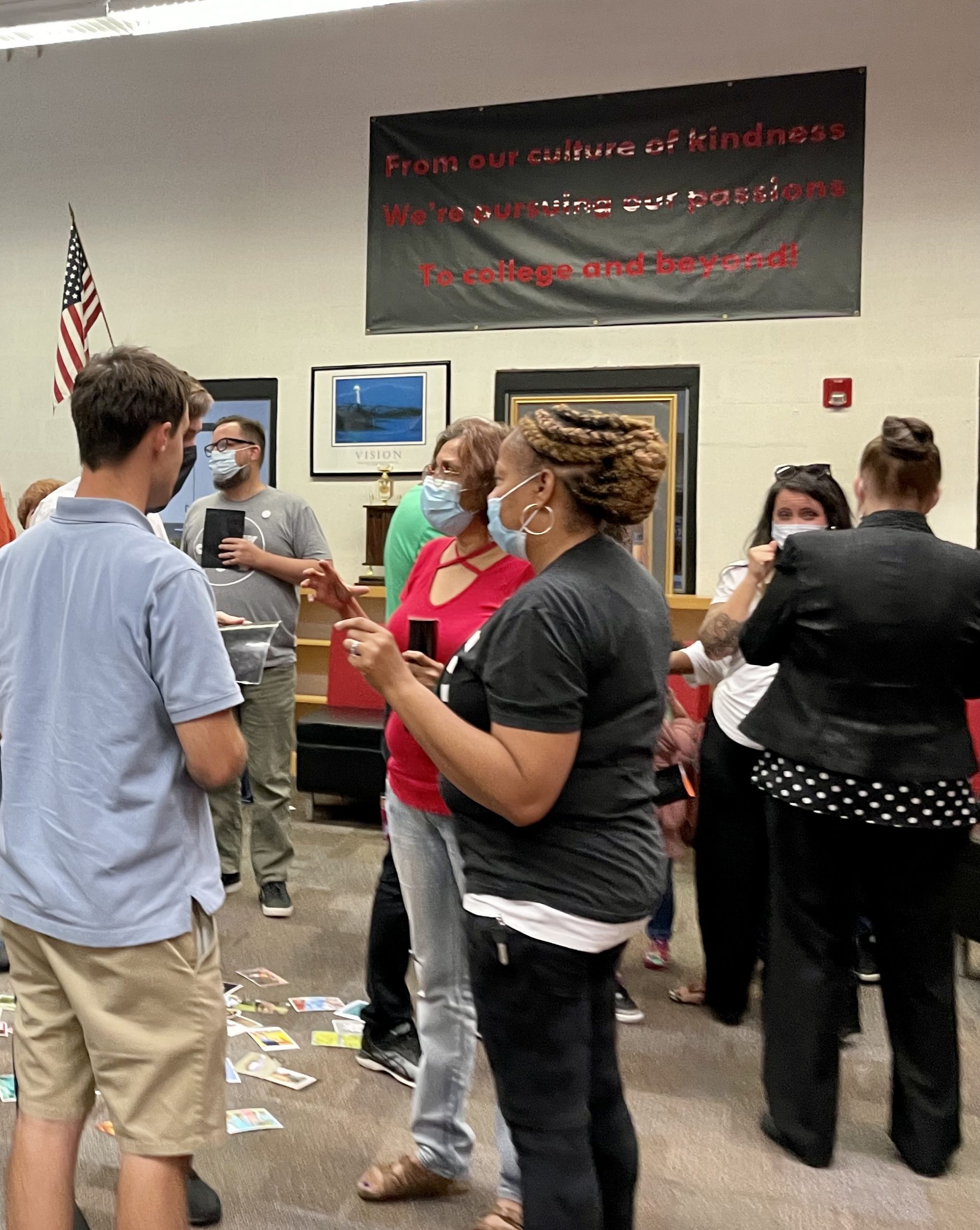
So, one day after a group challenge in the physical education classroom I experimented with spreading out a whole deck of Chiji cards on the gym floor and asked the group of 24 students to come to agreement on one card that represented what they achieved together. I was amazed at the results….

Processing Tools and Techniques
The students immediately were drawn in by the cards. They were seeing this as another engaging activity or challenge rather than that “that boring processing thing you do after the fun activity”. It was if they were unaware that they were processing.


I became hooked on this method after hearing the rich dialogue that occurred as the students discussed the rationale for “their card” and worked on coming to consensus on one card for the group. The student’s shared profound insights about the cards and their connection to the activity learning as they came to consensus (without even realizing they were debriefing or processing).


I noticed that many group members who usually didn’t speak up during class or group sessions were expressing a great deal as they made an argument for their card. They often took the lead instead of the other loud voices by suggesting an alternative card that blended concepts put forward by different group members. Though it was a rich and meaningful discussion it also fit into the time parameters available in the short class time.


Miniature Metaphors
Since that time this has become my method of choice when using cards or objects in group processing or debriefing regardless of my group size. I have continued to witness this kind of interest and engagement in the activity and meaningful discussion stemming from the process of coming to consensus, sharing ideas and perspectives, and even arguing about what best represents the group. The rich dialogue that emerges from this method is great, as is the opportunity to practice group decision- making.


Examples of “Consensus” methods in processing:

ONE CARD OR OBJECT TO REPRESENT “Our Achievement”:
• After an activity/important moment/ end of session I just ask the group to come to agreement on one card/object that best represent their experience as a group, the strengths of the group, or something they have achieved together.


THREE CARDS TO TELL A STORY of “Where We Were, Where We Went and Where We Are Going”(Dave Lockett at Stevens Point School District sparked this idea when I was using processing cards with one of our groups on the challenge course):
• Have the group use the cards to tell a story of their experience together. Ask them to come to agreement and pick three of these symbols to describe:
• Where they were when they arrived, or first came together as a group
• Where they “went” as a group,
• Where they are Going next and/or what they plan to do with the learning
• This has become one of my favorite methods for helping a group tie it all together and connect experiences to future learning. I often use it as a closing activity or as way to “check in” halfway through a program. This gives participants an opportunity to influence the direction of their remaining time together.


SKILLS TO CARRY WITH US
• In the midst of a program or course have the group pick three objects s that represent important skills they used in completing that challenge that will be useful in upcoming activities, challenges, or day to day work life. Have them carry these objects on with them to the next activity. The group often spontaneously refers back to these objects/skills when they are engaged in a future challenge. You can also ways to intentionally integrate them into the next activity to carry lessons forward.


I have found in my work with ongoing groups when groups agree on an object or symbol that represents their collective experience, this symbol can often end up carrying a great deal of power for a group and emerges again later in different ways. It can be integrated later on into symbols for their group’s success, for “group norms symbols” or sometimes morphs into a group or team “mascot”.


Each group is very different in how they approach the decision- making aspect of this activity. For some groups it can be a great opportunity to discuss the difference between voting and consensus. It often inspires discussion around quick methods for coming to consensus such as “fist of 5″ of thumbs up which the groups continue to implement throughout their time together. Some of the most powerful discussions arise when there is disagreement as individual group members argue for their individual choice and then someone suggests an alternative card that combines many of the ideas put forth by others. Regardless of the final decision, it always seems to lead to rich discussion.


References:
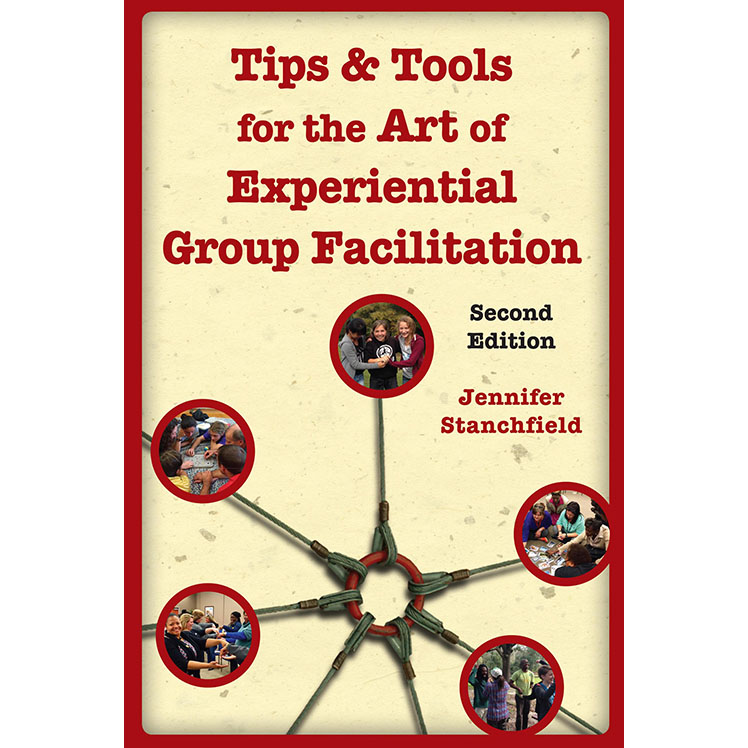
Stanchfield, Jennifer. (2007). Tips & Tools for the Art of Experiential Group Facilitation. OKC. OK: Wood ‘N’ Barnes Publishing.

Cain, J., Cummings, M & Stanchfield J. (2005). A Teachable Moment: A Facilitator’s Guide to Activities for Processing, Debriefing, Reviewing and Reflection. Dubuque, IA: Kendall Hunt Publishing

Simpson, S., Miller D., & Bocher B. (2006). The Processing Pinnacle: An Educator’s Guide to Better Processing. Oklahoma City: Wood ‘N’ Barnes Publishing


Resources for Using Objects and Images in Reflection:
www.chiji.com
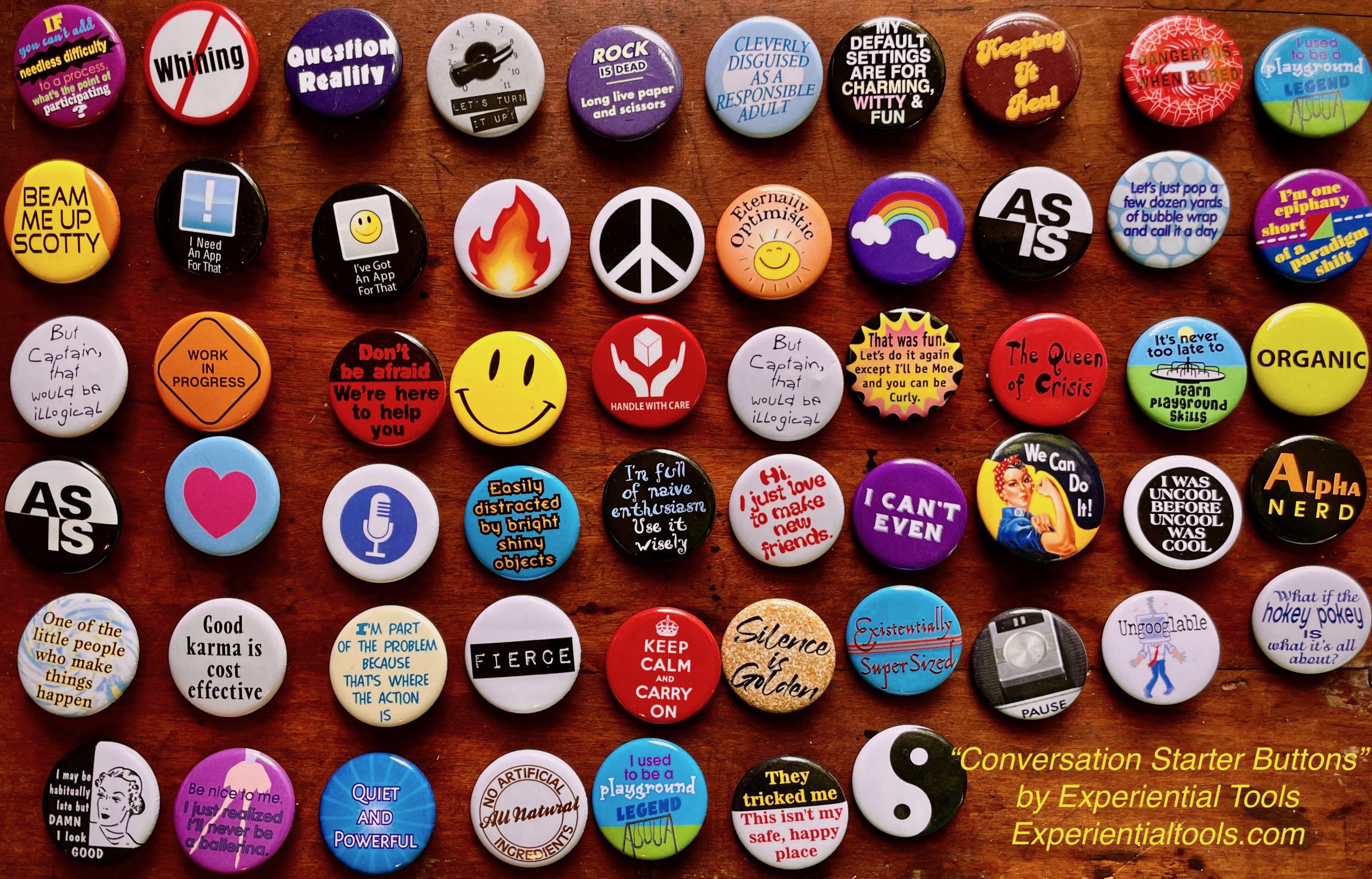
www.experientialtools.com
www.training-wheels.com


  • Share/Bookmark

12 May 2010

More on helping students practice decision-making, compromise, and consensus through experiential activities. A funny story:

Last week I mentioned my favorite way to divide a group into teams using a “Which One?” scenario where partners practice compromise/decision-making. After reading the last entry my colleague Kristen reminded me to share my funny “success” story from using this method with students in an elementary school:

I was working with a 2nd grade classroom in Middleton, Wisconsin, helping a teacher implement community building activities in her classroom.

Social & Emotional Learning Activities

Early in the session I used the “partner choice/which one” scenario for dividing the class up into teams in preparation for a game of Play dough Pictionary (see November 23rd entry).

I had them imagine they were at the circus and seeking out cotton candy. After waiting in line for the cotton candy they found that there was only one blue and one pink cotton candy left at the stand. The students had to decide who would get which one… One pair of students started arguing rather intensely about who should get the blue. Everyone else was ready to move on.


Instead of intervening directly with the students who were arguing. I decided to get everyone’s attention for a moment and ask a pair of students who had decided to share how they came to their decision to the group. One of the students shared: “Well, we both wanted the pink cotton candy, but I am okay with blue AND I wanted to find out what you are going to have us do with those spots and the play dough, so I let her have the pink one.”  Immediately the undecided pair looked at each other and quickly came to agreement.


At that point the student’s teacher and I took a few minutes to talk about the meaning of “compromise” and why we sometimes let go of our first choice to make things work for the group and ourselves. We moved on to the other cooperative activities we had planned for the day and forgot about the conversation.


That evening the teacher called me to tell me that a few hours after I left the students were lining up for lunch when a squabble erupted about who’s turn it was to lead the line to the cafeteria. Just as she was going to intervene, a little voice from the back of the line said: “You know guys, this is just like the cotton candy. We all just want to get to lunch.” This ended the squabble immediately- without adult intervention.


Sometimes the simple exercises we engage students in have more of an effect than we realize. Over my years working with groups I have noticed that some of the best “successes” in teaching come by accident; or the most profound lessons can come from the seemingly “less important” activities you engage a group in rather than the intense problem- solving lesson you carefully designed for the group.


Think about those “simple” opportunities you can weave into the day to day activities you plan for your group that practice these important life skills…


Reference: Tips & Tools for the Art of Experiential Group Facilitation. Jennifer Stanchfield. 2007: Wood ‘N’ Barnes Publishing.

  • Share/Bookmark

29 April 2010

Strategies for Helping Participants Practice Decision Making, Compromise & Consensus. Learning Through Play!

Learning Through Play

The Disappearance of Neighborhood Games of Kick-the Can, Part Two: Strategies for Helping Participants of All Ages Learn Through Play.


In Monday’s post I mentioned that I had observed a trend of children and adolescents missing out the development of important social & emotional skills because of a lack of time for “free play” without adult intervention.


I believe we can intentionally bring some opportunities for this kind of peer-to-peer learning and conflict resolution practice in our structured settings such as school, camp, and other recreational programs. When I work with people of all ages in experiential team building programs I purposefully create situations/opportunities for participants to practice coming to agreement on the rules of the game, a team name, a team symbol etc. I use methods that involve pairs and then groups making simple choices together and work up to practicing consensus.


Here is one of my favorite simple strategies for helping learners of any age practice these important skills:


Which one? Partner Decision Making Method for Dividing Into Teams: This activity came from my time teaching in Stevens Point, Wisconsin School District’s Experiential Education program. I started getting bored with the old counting off “1-2″ method of dividing students into teams or groups for a project or activity. I discovered through experimenting with this new method that I had found a fun and engaging way to divide into groups or teams for an activity or classroom project while at the same time helping participant’s practice communication, decision- making, consensus, making a compromise with peers.


Directions:


  • Have everyone find a partner.  In many situations a student will often pick a buddy you would rather they are separated from. This is fine, even preferable, because they will be splitting up soon. This method of dividing honors their need to partner with a friend because it gives the friends something to do together before they split up.
  • Present a hypothetical situation with two choices. For example: “Imagine it is summer and the two of you are near a river. You want to play on the river, but the only boats available are a kayak and a one-person canoe. Which one of you will take the kayak, and which the canoe? Or: You are at an ice cream stand and the freezer has broken down, there is only one cone of chocolate, one of cookie dough. Who gets which? Cookie dough’s become one team, chocolates the other. Other scenarios I have used: cotton candy flavors, roller blades or skateboards, toboggan or saucer sled etc.


Over the year’s I have noticed that kids of all ages have bought into this method of dividing teams without “pre-arranging” themselves the way participants often do with the old 1,2 count off method. I think it could be because they get to have the connection with their friend first- you are honoring their need to pair with who they are comfortable first before sending them apart.

It can be surprising how intense the discussions and negotiations around these imaginary decisions can be!

I have had many teachers report how they have appreciated this simple exercise for helping practice and reinforce conflict resolution, positive decision- making and the idea of compromising-coming to consensus. Adult participants share that they enjoy the sense of connection and humor from sharing and making decisions about these hypothetical scenarios.


Reference: Tips & Tools for the Art of Experiential Group Facilitation. Jennifer Stanchfield, Wood ‘N’ Barnes Publishing 2007

Middleton School District Experiential Education Curriculum; Jennifer Stanchfield, 2001

  • Share/Bookmark

26 April 2010

The disappearance of neighborhood games of “kick- the- can” and “kickball”. How de we help students continue to learn from play?

In my work with students in a variety of schools and treatment programs I have noticed over recent years that they increasingly seem to struggle with group decision- making. I often observe students on the playground during recess coming to ask teachers for help in resolving even the simplest disagreements or conflicts. They often depend on teachers and other adults to pick teams for games, decide who should go first, or who should be it. These are decisions that I remember me and my peers sorting out on our own (most of the time) during our pick up games of “kick the can”, kick-ball and other games we played in our neighborhood or playground.


I started realizing this might be influenced by the fact that many students in today’s society don’t have the opportunity to engage in the unsupervised free play with peers that many of us who are now adults did during our childhood.

playground2

Our society is becoming increasingly isolative.  Children aren’t out playing pickup games of kickball or kick the can in their neighborhoods during free time after school, or on summer evenings as they once did. Parents are often fearful about letting kids play and roam the neighborhood on their own.


Children and adolescents participate in a great deal of solo video and computer games. Most often children’s group recreation these days involves team sports, clubs, and after school programs led by adults. There is obviously great value in structured team and after school programs, and a benefit to having excellent adult role models in these programs who positively impact students.

A downside of this shift is that kid’s are not gaining the important skills that are learned from interaction with peer only groups without adult intervention. They miss out on opportunities to practice being flexible and making compromises with each other in order to make a game work and learning that play is not always “getting their way” or winning. In peer only activities kids gain valuable experience in coming to consensus on the rules of play, decision-making, and developing social skills around communication and conflict resolution.


I remember as a kid having many opportunities for unstructured play in our neighborhood; pickup games of all kinds filled our summer days and after-school hours. Arguments about who was “it” or who won inevitably arose, but we figured out ways to work it out ourselves rather than interrupt the game to run home and get an adult to decide for us. It appears that in modern society with less participation in peer-only play, kids are missing out on opportunities to gain conflict resolution, problem solving and group communication skills. We can help students gain these skills by providing opportunities within our adult led structured programs to practice decision making and communication on their own.


After observing this trend in students I work with,  I started intentionally focusing on implementing activities that practice the use of decision-making by consensus. I purposefully create situations and opportunities that allow students to practice coming to agreement on the rules of the game, a team name, a team symbol etc. I use methods that involve pairs and then groups making simple choices together and work up to practicing group consensus. This a valuable practice for groups of all ages.


In the next few days I will post some of my favorite activities and strategies for helping learners practice these important skills. Please share your thoughts about the changes in the patterns of play, the value of “free play” and strategies you have found useful in helping students learn and practice these valuable life skills within structured programs.

  • Share/Bookmark

18 April 2010

May Workshops Offered in Maine and Vermont

Jen Stanchfield’s Upcoming Workshops Designed for Advisory Group Leaders:

Advisory group leaders report that they are always looking for new ideas for facilitating advisory sessions with students. Many educators are planning for the remaining few months of school, summer programs and the start of next school year. The Chewonki Foundation in Wiscasset Maine and the Southern Vermont Learning Collaborative in Dummerston, Vermont are each hosting a one day workshop designed for advisory group leaders, counselors, teachers, camp and after school program staff.

This workshop explores activities and experiential approaches that teach and reinforce important social and emotional skills such as positive communication, conflict resolution, decision making, reflection, community awareness, respect, responsibility and problem-solving. Attendees will leave with many practical activities they can use in any size space with simple materials. They will learn helpful facilitation tools and techniques and strategies for creating “buy in” from participants, building a positive environment for learning, and helping students make connections from activities done in advisory group to real life situations. These experiential activities and approaches can be applied to academic, therapeutic and recreational group work and adapted to all age groups.

This workshop is a great resource for any group leader!


  • Workshop Tuesday May 11th 9:00-3:00 at the Chewonki Foundation in Wiscasset, Maine is $95.00 including lunch. For more information or to register, contact jen@experientialtools.com


  • Share/Bookmark